
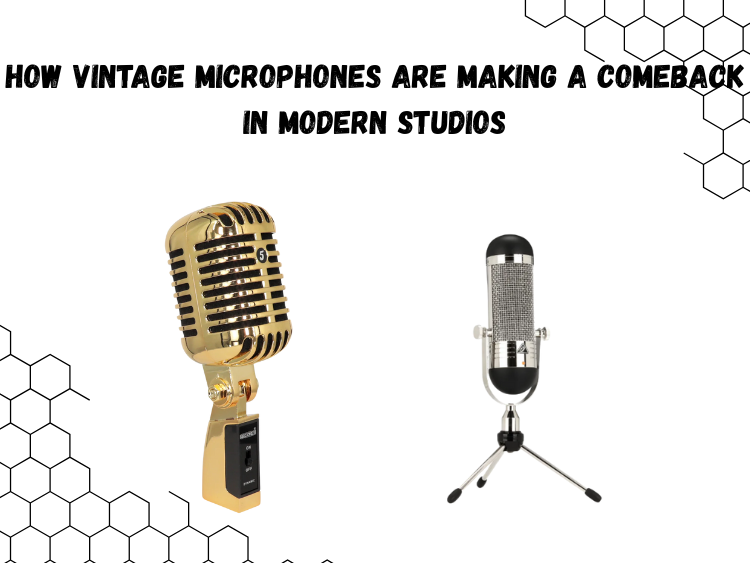
Open the door of any contemporary recording studio, and there should be an eye-catching sight that you will recognize, something tall, metallic, and decidedly retro-looking adorning the vocal booth. It is not just to be showy. Second-hand microphones are back on the table, and not only collectors will want this.
It is not nostalgia as such. It is about sound, deep textured, imperfect sound. And in a music business where there has become a bit too much clean, a bit too sterile in the music business, those flaws are again in vogue. This is the revival of the vintage mic.
Vintage ribbon microphones remain beloved in studios for their warm, natural tone. A detailed industry overview highlights that, despite higher price tags, vintage ribbon microphones continue to be popular among recording engineers and audiophiles, prized for their rich low-frequency roll-off and classic, “smooth” sonic character—an aesthetic that modern reproductions often strive to replicate, according to Market Research Intellect.
The Shift Toward Soul Over Specs
For the last two decades, recording gear has been obsessed with numbers. Low noise floor, ultra-flat frequency response, surgical detail. Every mic started chasing a kind of digital perfection—and somewhere along the way, the vibe got lost.
But vintage microphones? They never played by those rules. They were warm. Unpredictable. Full of character. They hugged the midrange and gave vocals a buttery glow. They weren’t perfect, and that’s exactly why they worked.
Today’s engineers are rediscovering that magic. Whether it’s analog purists or laptop producers, the shift is clear: people are tired of sterile. They want something that feels lived-in. And that’s exactly what retro audio gear brings to the table.
USB Brought Retro to the Bedroom
Part of this revival comes down to access. You no longer need to hunt eBay or spend thousands restoring a 50-year-old ribbon mic to get that old-school sound. Now, you just plug one in.
Take the Behringer BVR84—a USB condenser wrapped in a broadcast-era body. No interface. No external power. Just plug it into your computer and you’re up and running.
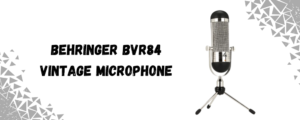
That retro aesthetic? Fully intact. But more importantly, it sounds like something. Slight saturation in the mids. Rounded-off highs. It’s exactly the kind of character missing from most modern recordings—and it’s finally accessible to anyone with a laptop.
Plug in vintage tone with zero hassle — try the BVR84 and bring back the vibe.
The 5 Core RETRO MIC: Where Style Meets Substance
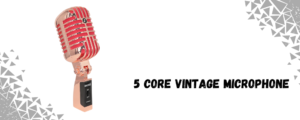
On the XLR side of things, the 5 Core vintage drum mic is a standout. At first glance, it’s all flash—deep metallic blue finish, chrome mesh grille, retro silhouette. But plug it in, and the look takes a backseat to tone.
The retro mic isn’t chasing hyper-accurate, flat response. It adds lift in the presence zone—right where vocals sit—and smooths out the sibilance. It’s flattering. Musical. Designed to make people sound better, not just accurately recorded.
And in a time when voices are the commodity in the content creation age, that is more important than ever. The livestream, studio vocals, and voiceovers all get the richness back that has been ironed out with too much digital equipment with this mic.
Add warmth and presence to your voice — record with the 5 Core vintage mic today.
Why Artists Are Leaning Vintage Again
It’s not just engineers driving the shift. Artists are tired of sounding like everyone else. They don’t want another clean, clinical vocal track—they want something that feels like them.
Vintage-style mics bring back the human element. The little resonances. The subtle color. They add a sense of space and soul that software can’t fake. That’s why so many indie singers, rappers, and even podcasters are reaching for retro-style mics first.
It’s also about workflow. You don’t have to “fix it in post” when your mic already sounds like a record. That vibe straight off the raw track? That’s what keeps creators moving.
Not Just for Music Anymore
This revival isn’t confined to traditional recording either. You’re seeing vintage designs everywhere—streamers, YouTubers, podcasters. Why? Because content creators care about presence.
A retro mic on camera signals professionalism. It stands out. And when it sounds warm and rich without needing five plugins? That’s a win across the board.
The RM-7 BLU is especially popular among creators who want both style and tone. It looks great on a desk, but more importantly, it handles speech beautifully—capturing depth and warmth even in untreated rooms.
The Real-World Payoff
Here’s the deal—vintage-style microphones aren’t about chasing the past. They’re about fixing what got lost in the digital age.
The best of these modern throwbacks, like the RM-7 and BVR84, deliver retro tone without the old-school headaches. No fragile tubes. No noise issues. No vintage maintenance. Just that classic microphone sound, ready to go.
And that’s what makes this revival different. It’s not about going backward. It’s about moving forward with tools that actually feel musical.
Final Thoughts
The nostalgic retro audio equipment pop is not a fad. It is the opposite of the excessive digitalization of the past several decades. People desire gear that can sound as though it is being played in a room, and not a spreadsheet.
Create that warm, full sound with a modern price tag with models such as the 5 Core vintage mic and Behringer BVR84, to name but two.
Therefore, whether you are working on the vocal effects, on the podcast, or in case you simply want your voice to be heard, do not hesitate to use something a vit-old school. Occasionally, the sound of modernity can be most effectively achieved by sounding in the timeless.
Here you can find amazing drum thrones; alternatively, browse our product page to find the best keyboard bench, audio mixers, drum mics, piano bench, keyboard stand, speakers, party speakers, and more.