

One of such crossroads every musician or engineer has to pass at one point or another is microphone shopping. Perhaps you would like that smooth, vintage sound which you listen to on old records. Or you are after the shine and detail which makes modern vocals protrude out of the mix. Both ribbon and condenser mics are not just found in the top studios on a whim, so what is the answer to the question of which will work best in your studio?
The primary distinction between ribbon and condenser microphones lies in the sound profile and their suitability for different studio sources. As the audio experts at Beyerdynamic explain, the condenser microphone, with its extremely lightweight foil diaphragm, is prized for its high sensitivity and ability to capture even the “faintest of acoustic sound signals,” resulting in a delicate, high-resolution sound that is “very ‘open’ and ‘elegant’”—making it a studio standard for precise vocals and high-frequency acoustic instruments.
Conversely, the ribbon microphone, technically a form of dynamic mic, uses an aluminum ribbon that yields a warmer, smoother sound with a natural roll-off in the high frequencies, often favored for providing an “untainted, natural reproduction of mid-range frequencies” and taming the harshness of sources like electric guitar amps or brass
Ribbon Microphones: The Vintage Smooth Operator
Walk into any studio lined with jazz LPs, and you’ll probably catch a ribbon mic in action. Ribbons use a tiny, feather-light strip of metal that moves between magnets. What ends up on tape is markedly classic: no harshness, a gentle touch on treble, and a soft edge that flatters horns, electric guitars, room mics, and those “in-the-room” vocals. Engineers rave about how ribbons put a gentle lid on brash cymbals, sibilant vocals, or brittle brass.
The flip side? Ribbon mics are famously delicate. Knock one over, or give it phantom power by mistake, and that’s game over for the ribbon inside. And unless you’ve got a beefy preamp, expect to roll that gain knob higher than usual. Still, the payoff is unmistakable: they bring a natural, finished tone that doesn’t need wrestling in the mix.
What They’re Great For:
- Jazz vocals, string quartets, and old-school rock
- Brass and wind instruments that get “spikey” in other mics
- Guitar amps and drum overheads, especially for roomier, vintage tones
- Any session where you want warmth, not splash or zing
Condenser Microphones: The Modern Detail Specialist
If you’ve heard a sparkling podcast, an acoustic performance with finger snaps, or a soaring pop vocal, a condenser was likely involved. Condensers use a charged diaphragm and backplate—think of them as audio magnifying glasses. Expect huge detail, precision, and sensitivity, from the shimmer of cymbals to every shift in a singer’s delivery.
Condenser mics love high frequencies. They also require phantom power (48V), and they’ll happily pick up coughs in the hallway if your space isn’t treated. But when you dial them in, what you capture is faithfully, sometimes brutally, “real.”
When to Reach for a Condenser:
- Studio vocals (pop, rock, voiceover)
- Acoustic guitars, pianos, and stringed instruments
- Drum overheads or choirs when you want space and air
- Any situation where accuracy is the priority
Quick Comparison—What Sets Them Apart?
| Ribbon Microphones | Condenser Microphones | |
| Sound Profile | Warm, smooth, vintage | Crisp, clear, detailed |
| Sensitivity | Lower, needs good preamp | High, works with most setups |
| Power Needs | Passive; avoid phantom | Needs phantom (48V) |
| Durability | Fragile | Moderately durable |
| Best For | Brass, amps, room sound | Vocals, acoustic, podcasts |
| Output | Often quieter | Generally hot signal |
Standout Models: Real-World Examples
MXL R144 Ribbon Microphone
The MXL R144 is a sleek, professional ribbon microphone designed for smooth, natural sound reproduction across vocals and instruments. It features a figure-8 polar pattern for stereo and dual-source recording, with a frequency response of 30Hz to 20kHz. Its durable construction and ribbon element provide warm, vintage-style tones, perfect for studio use.
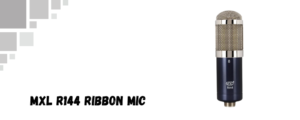
- Ribbon microphone with natural, smooth sound quality
- Figure-8 polar pattern ideal for stereo and room ambiance
- Frequency response covers 30Hz to 20kHz
- Rugged design with a torch-treated ribbon element for longevity
CTA: Capture rich, authentic tones—order the MXL R144 Ribbon Mic now and upgrade your studio sound with vintage warmth!
5 Core Condenser Recording Microphone (RM-7-BG)
The 5 Core RM-7-BG is a professional condenser microphone optimized for podcasting, streaming, and studio recording. Featuring a cardioid pickup pattern and wide frequency response (20Hz–20kHz), it captures vocals with clarity and minimal noise. Equipped with a shock mount and pop filter, it reduces vibrations and plosives for clean audio. Compatible with PC setups, it’s ideal for gamers, content creators, and vocalists.

- Condenser mic with cardioid pattern for clear vocal focus
- Frequency response from 20Hz up to 20kHz for detailed capture
- Includes shock mount and pop filter for noise reduction
- USB compatible for plug-and-play PC recording
CTA: Create crystal-clear streams and recordings—get the 5 Core RM-7-BG today for a complete professional audio setup!
Conclusion
You don’t need to pick “the best,” just the best for today’s track. Most pros lean on both styles in a single session: ribbon for warmth and vibe, condenser for top-end clarity. If you record bright guitars or brassy horns, park a ribbon in front. For lead vocals, acoustic strings, or anything you want “true,” reach for a condenser.
Already have a ribbon-versus-condenser tale to share? Tips and stories from your sessions aren’t just helpful—they’re what everyone’s after. Jot them down below.
For more on matching your setup with real-world gear, or to find benches, stands, mics, and more, swing by our homepage for resources that keep your rig sounding—and looking—its best.
Here you can also find amazing drum thrones; alternatively, browse our page to find the best keyboard bench, audio mixers, drum mics, piano bench, keyboard stand, speakers, party speakers, and more.