

Ever notice how some mics catch the entire room, while others seem laser-focused only on what you aim them at? That’s the magic (and sometimes the headache) of polar patterns. It isn’t a fancy extra; it’s built right into the mic’s DNA—and it might be the real difference between a killer track and an unfixable mess.
Cardioid: The Workhorse
If you’ve used any stage or studio mic, odds are it’s a cardioid. Why? It picks up sound dead-ahead, blocks out most side noise, and shrugs off whatever’s happening behind it. Singers, podcasters, guitar cabs, voiceovers—this is the Swiss Army knife of patterns. It even helps cut down on feedback.
- Best for: Solo vocals, live gigs, focused instrument recording, recording in semi-noisy rooms.
- Quick tip: Aim it so the back faces your noisiest spot—amp, window, etc.
5 Core XLR Dynamic Microphone – Handheld Karaoke & Studio Mic
A rugged, versatile dynamic microphone ideal for karaoke, singing, and studio applications. It features a cardioid pickup pattern to reduce background noise, with a wide frequency range for clear vocals and instruments.
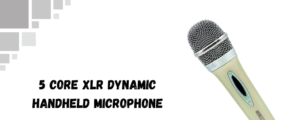
- Cardioid dynamic microphone ideal for vocals and live use.
- Frequency response: 50Hz to 15kHz captures full vocal range.
- Durable metal body suited for rough handling & frequent use.
- XLR professional connection for studio and PA compatibility.
Supercardioid and Hypercardioid: Tighter Focus
Imagine cardioid as a flashlight beam—supercardioid is a spotlight, and hypercardioid’s even narrower. You get pinpoint pickup, which helps in loud environments or on crowded stages (think drum overheads, snare close-mics). The catch: these patterns also grab some sound from directly behind, so place them carefully.
- Best for: Live vocals, isolating specific instruments, less bleed from bandmates.
- Watch out: They reject sides even better but are pickier about what’s behind them.
Omnidirectional: Everything, Everywhere
“Omni” means your mic hears the world in 360°. Great for group vocals, choir, roundtable podcasts, or anywhere you want natural room sound. Super forgiving if the artist moves around.
- Best for: Ensemble recording, capturing ambience, interview setups.
- Heads up: You’ll hear more room echo, background noises, barking dogs… you name it.
Figure-8 (Bidirectional): Front and Back
Old-school ribbons and some modern mics offer this. Audio comes in from in front and behind, yet sides stay muted. Useful for duets, interviews across a table, or creative stereo tricks.
- Best for: Two-person podcasts, mid/side stereo recording, certain instrument pairings.
- Heads up: Place sound sources directly in front and back, avoid noisy sides.
Ambient Recording Emesser ATE308 – Figure-8 Ribbon Microphone
The Emesser ATE308 is a high-quality ribbon microphone with a figure-8 polar pattern, perfect for capturing stereo and bi-directional sound sources in studio recordings. It offers a natural, warm tone with extended frequency response and precision ribbon element design.
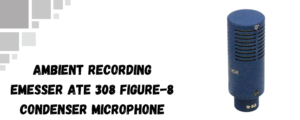
- Figure-8 ribbon microphone for stereo and dual sound source recording.
- Frequency response: 30Hz to 18kHz with smooth highs and warm lows.
- Rugged construction with durable ribbon element for longevity.
- Ideal for vocals, strings, and orchestral recording in professional studios.
Real-World Advice Before You Buy
- Test in context: Don’t just trust the label. Plug the mic in your space and walk around while talking or playing. Mic’s sweet spots vary.
- Read the room: If you record in a noisy or untreated space, tighter patterns = less cleanup later.
- Ambience or isolation: Decide if you want natural room reverb or a “dry,” close feel. That answer alone often chooses your pattern for you.
- Switchable patterns: Some mics offer toggles. Try them all and make rough demo tracks. Your ears won’t lie.
Bottom line
Polar pattern isn’t just spec-sheet filler. It’s the real reason certain mics “just work” (or totally flop) in certain settings. Master what each does, and you’ll actually start planning your sound before you even hit record—like the pros.
Got specific gear in mind, or need examples for a project type? Let me know what’s next. We’ll keep everything grounded and clear, every time.Here you can also find amazing drum thrones; alternatively, browse our page to find the best keyboard bench, audio mixers, drum mics, piano bench, keyboard stand, speakers, party speakers, and more.