

You pick up a microphone, see “wireless” on one box and “Bluetooth” on another. They both promise no tangled cables, total freedom on stage or in the crowd. But dig deeper, and you’ll realize they play entirely different games. Skip the marketing—they’re not interchangeable, and picking the wrong one WILL bite you. Here’s the breakdown with zero fluff.
The True Differences — Real-World Points
- How they talk to your gear:
Wireless mics send your voice using pro radio frequencies (UHF/VHF), and need a separate receiver. Bluetooth mics connect straight to your laptop, phone, or Bluetooth speaker. One’s built for serious stage setups, the other for plug-and-play home jams. - Reach:
Wireless is meant for moving around a hall, jumping off a stage, or wandering 100+ feet from base. Bluetooth is for living rooms—step into the kitchen, the signal’s probably gone. - Sound:
Wireless grabs every detail, no compression, broadcast-quality—for concerts or pro streams. Bluetooth mic sound gets squeezed through compression, which means you LOSE some bite, especially with loud vocals or low growls. - Delay & Dropout:
Wireless is instant, made for real-time singing, speaking, playing. Bluetooth can be a game of “Where’s my signal?” and the lag makes it a nightmare for live shows. - Interference:
Wireless mics are designed to dodge crowds of phones and WiFi. Bluetooth mics compete with every headphone, smartwatch, and POS terminal within a city block. Get ready for hiccups at public events. - Who should use which:
Wireless: Live vocalists, presenters, wedding DJs, serious video people.
Bluetooth: Karaoke die-hards, quick podcasters, anyone who wants “just connect and go.”
Side-by-Side Comparison
| Feature | Wireless Microphones | Bluetooth Microphones |
| Connection | RF (UHF/VHF) to receiver | Direct Bluetooth pairing |
| Typical Range | 100–300+ ft, stage-ready | 10–30 ft, home and party use |
| Audio Quality | Full-spectrum, pro standards | Compressed, loses some clarity |
| Latency | Zero—suitable for performance | Noticeable delay for live use |
| Reliability | Stable in high-tech/urban environments | Prone to dropouts, interference |
| Setup | Needs receiver, sometimes frequency scan | Just “pair and play” |
| Battery | Replaceable packs or rechargeables (long life) | Internal, often shorter overall |
| Ideal For | Gigs, presentations, studio, events | Karaoke, at-home jams, small groups |
Product Deep Dives
5 Core Pro Wireless Handheld Microphone (WM-1001)
This is the wireless mic you grab when dropouts or muddled vocals aren’t an option. Built for relentless movement and long gigs.
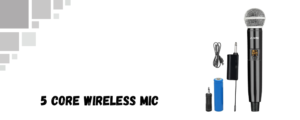
- Digital transmission (UHF): Works in busy venues and outdoor events without interference.
- Rechargeable, runs for hours—no scrambling for new batteries mid-set.
- Rugged metal build, no-fuss syncing with pro receivers.
- Vocal capsule tuned for present, balanced sound—whether you speak or belt.
Go with this if: You play shows, stream, or host serious events and need audio that won’t quit and a signal that doesn’t drop.
JBL PartyBox Wireless/Bluetooth Microphone
This bluetooth mic is pure fun—no setup drama, built for parties, backyard jams, and spontaneous karaoke nights.
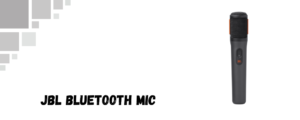
- Bluetooth pairing (and “PartyBox” direct sync) in seconds.
- DSP processing for off-the-bat clear sound—great for group vocals, not fussing with EQ.
- Lightweight plastic shell travels anywhere; USB charge is quick.
- 10+ hour battery—keeps sessions going after midnight.
Use this if: You want quick, communal sound for birthdays, living rooms, or hanging out—no pro experience needed.
Conclusion
Don’t let “wireless” fool you. Wireless mics are a workhorse; Bluetooth mics are casual, convenient, and best for small spaces. Which will you trust for your next gig, stream, or wild night in? Pick wisely—your sound, your crowd, your moment depends on it.
Here you can also find amazing drum thrones; alternatively, browse our page to find the best keyboard bench, audio mixers, drum mics, piano bench, keyboard stand, speakers, party speakers, and more.