
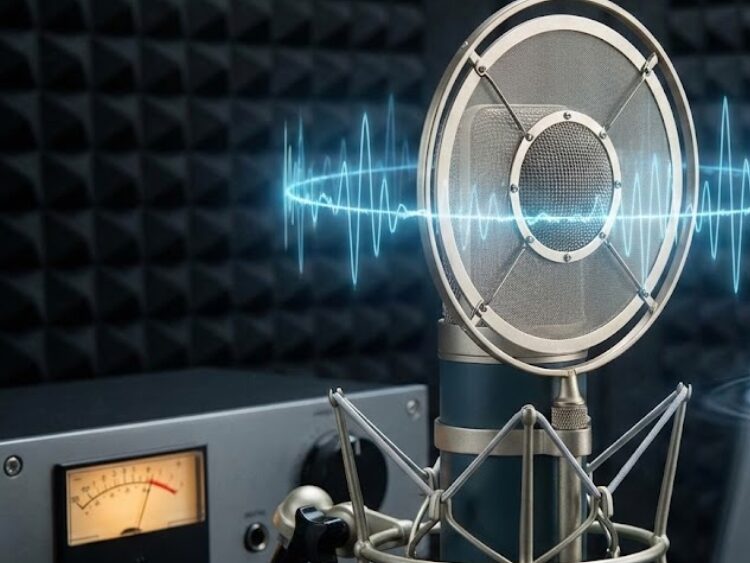
Most people pick microphones based on polar pattern and frequency chart, and only glance at sensitivity after the fact. Sensitivity, usually given in mV/Pa or dBV/Pa, tells you how much electrical signal a mic produces from a standard sound pressure level—typically 94 dB SPL at 1 kHz, equal to 1 pascal. Higher‑sensitivity mics put out a higher level for the same source; lower‑sensitivity mics need more gain from your preamp to hit a healthy recording level. That simple difference changes noise, punch, and how “close” or “roomy” a recording feels.
Microphone sensitivity, the measure of electrical output (voltage) for a standard acoustic input (like 94 dB SPL), fundamentally influences the sound’s clarity by affecting the noise floor. A microphone with higher sensitivity (a less negative dBV/Pa number, common in condensers) produces a stronger signal, meaning it requires less preamplifier gain to reach a usable recording level. This is crucial because high-gain settings on a preamp will amplify not only the desired signal but also the microphone’s inherent self-noise.
Therefore, using a high-sensitivity microphone often results in a cleaner tone with a better signal-to-noise ratio because less downstream amplification is necessary. As detailed by Neumann, sensitivity is particularly important for low-output dynamic microphones to achieve good noise performance.
High‑Sensitivity Mics: Detail, Air, and Noise Floor
A high‑sensitivity microphone might deliver tens of millivolts per pascal, or a spec somewhere around –36 dBV/Pa, which means it doesn’t need much preamp gain to get a vocal or acoustic guitar sitting at a good level. Because you’re not cranking the preamp, the system’s noise floor stays lower relative to the signal, so small textures—breath, pick noise, subtle room reflections—tend to ride on top instead of getting buried.
That same trait can work against you in less controlled spaces. High sensitivity doesn’t only boost the source; it boosts everything the capsule hears. In untreated rooms or noisy houses, these mics happily capture computer fans, street noise, and high‑frequency hiss that you might not notice while tracking but will definitely hear once you compress and brighten the track in the mix. The tone ends up more open and “hi‑fi,” but also more revealing of the environment.
Low‑Sensitivity Mics: Punch, Isolation, and Character
Dynamic microphones often sit in the 1–4 mV/Pa range, corresponding roughly to –60 to –48 dBV/Pa, and some ribbons go even lower. To reach the same recording level as a hot condenser, you have to add significantly more gain, which puts more of the preamp’s character and noise into the equation. When the preamp is clean and quiet, the result is often a thicker, more “forward” sound with less exaggerated top‑end detail.
Because low‑sensitivity mics don’t “jump” at every quiet reflection, they naturally downplay room ambience and background noise compared with high‑sensitivity condensers placed at the same distance. On loud sources—amps, drums, shouty vocals—that can translate into recordings that feel tighter and more controlled, with transients that saturate a little rather than floating above the mix in a cloud of high‑frequency detail.
How Sensitivity Interacts with Distance and Gain Staging
Sensitivity doesn’t live in a vacuum; it works alongside placement and gain. A hot mic placed far from the source can still give you plenty of level, but what you’ve really captured is a blend of direct sound and room tone, which can make tracks feel wider yet less focused. A less sensitive mic pushed closer to the source often emphasizes direct sound and proximity effect, giving vocals or instruments a thicker low‑mid presence and a more intimate tone.
Gain staging ties it all together. With high‑sensitivity mics you want to keep preamp gain moderate so you don’t clip on loud peaks, while with low‑sensitivity models you have to find the balance between enough gain for a strong signal and not so much that preamp hiss or hum creeps in. Get this wrong and sensitivity stops being a tone tool and becomes a noise problem—either everything sounds thin and distant from under‑driven mics, or harsh and stressed from constantly flirting with overload.
Where Wireless Handhelds Fit into the Picture
Handheld wireless vocal mics typically sit in a middle ground: sensitive enough to pick up spoken word and singing at a comfortable distance, but not so hot that they feed back instantly on loud PA systems. Many UHF systems specify capsule sensitivities around –49 to –63 dB relative to 1 V at a given pascal, paired with receiver stages that provide enough output for mixers without excessive noise.
In practice, that means these mics lean toward clarity and intelligibility for live use: enough output to keep preamp noise under control, moderate sensitivity so crowd spill and stage wash don’t dominate, and a tone that stays usable whether the singer is right on the grille or a few inches back. How you set your receivers’ levels and channel gains will decide whether they sound crisp and musical or thin and noisy.
Product Spotlight: Two Wireless Vocal Options in This Sensitivity Game
5 Core RM‑7 BLU Recording Microphone
The 5Core RM‑7 recording mic uses a large‑diaphragm cardioid condenser capsule with a listed sensitivity of ‑34 dB ±2 dB (0 dB = 1 V/Pa at 1 kHz), which translates to roughly 20 mV/Pa and makes it easily driven by typical audio interfaces or budget preamps without requiring excessive gain. Combined with its 20 Hz–20 kHz frequency range, 132 dB max SPL, 16 dB‑A equivalent noise, and 78 dB S/N ratio, it is tuned to pick up fine vocal detail at close range for podcasting, gaming, and music recording, but will exhibit more audible noise floor and less headroom than a flagship studio mic in very quiet rooms. The bundled pop filter, shock mount, foam, mini tripod, and XLR‑to‑3.5 mm cable emphasize plug‑and‑play desktop use across Windows, macOS, Linux, and some smartphones, so practical sensitivity is balanced against convenience rather than absolute noise performance.
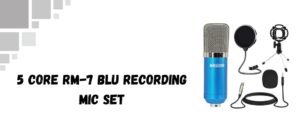
- Sensitivity: ‑34 dB ±2 dB (≈20 mV/Pa), high enough for easy driving with modest preamps.
- Self‑noise: 16 dB‑A; S/N: 78 dB; max SPL: 132 dB at 1% THD, suitable for vocals, speech and most instruments at typical distances.
- Best suited to: budget podcasting/streaming and project‑studio vocals where high sensitivity helps weaker front‑end gear, and ultra‑low noise is not the primary goal.
RØDE NT1 Signature Series
The RØDE NT1 Signature Series is a large‑diaphragm HF6 cardioid condenser explicitly designed for high sensitivity with extremely low noise, specified at around ‑29 dB re 1 V/Pa (≈35 mV/Pa) in the NT1 family, paired with an exceptionally low 4 dB‑A self‑noise—one of the quietest studio microphones available. This combination means the mic delivers more output for a given sound pressure than the 5Core, while contributing far less electronic noise, so very subtle sources like soft vocals, fingerpicked guitars, room ambience, and foley can be captured cleanly without pushing preamp gain into a noisy region.
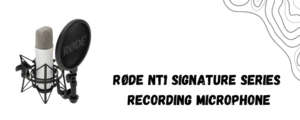
With a smooth 20 Hz–20 kHz response, tight cardioid pattern, 142 dB max SPL, and high‑grade internal electronics plus Rycote Lyre capsule suspension, the NT1 Signature is built for professional studios and serious creators who need sensitivity plus near‑silent operation across vocals, instruments, VO, podcasting and streaming.
- Sensitivity: ≈‑29 dB (≈35 mV/Pa), higher than RM‑7, giving stronger output at the same source level.
- Self‑noise: 4 dB‑A; max SPL: 142 dB; very wide dynamic range, making it suitable for both whisper‑quiet sources and extremely loud material without distortion.
- Best suited to: critical studio recording, high‑end podcasting/VO, and music production where maximum sensitivity and ultra‑low noise floor are essential.
If you want, the next step can be a comparison table focusing on range, response, latency, and ecosystem (general PA vs PartyBox‑centric).
Here you can also find amazing drum thrones; alternatively, browse our page to find the best keyboard bench, audio mixers, drum mics, piano bench, keyboard stand, speakers, party speakers, and more.